

The UEFA Women’s Championship, also known as the European Women’s Football Championship, is the most prestigious tournament for women’s football teams in Europe. This article ok9aa will introduce the history, format, featured teams and future prospects of the tournament.
History of the UEFA Women’s Championship
The UEFA Women’s Championship was first held in 1984, under the name European Competition for Women’s Football. At that time, only four teams participated, with Sweden becoming the inaugural champions after defeating England on penalties.
Over the decades, the tournament has expanded in size, from eight teams (1997) to 12 teams (2009) and now 16 teams since 2017. This growth has been accompanied by increased investment in women’s football, with larger stadiums, stronger media coverage and record crowds. For example, the 2022 final at Wembley Stadium (England) attracted more than 87,000 spectators, setting a European record.
UEFA Women’s Championship competition format
Qualifying round
The UEFA Women’s Championship begins with a qualifying round, with over 40 teams from UEFA member nations taking part. Teams are divided into groups of four, playing a round-robin format over the course of 18 months. The group winners and a few best runners-up qualify for the finals. The host nation usually gets a bye-in.
Final round
In the finals, the 16 teams are divided into four groups of four teams each. The top two teams from each group advance to the knockout stages, which include the quarter-finals, semi-finals and final. The knockout matches use extra time (30 minutes) and penalties if necessary to determine the winner. The tournament usually lasts about three weeks, taking place in July to accommodate the international schedule.
Conditions of participation
Women of all ages can participate, as long as they are members of a UEFA member association’s national team. There is no age limit like in youth tournaments, giving teams the freedom to call up both veteran stars and emerging talent.
Featured teams and players
Dominant teams
Germany are the most successful team in the history of the UEFA Women’s Championship with 8 titles (1989, 1991, 1995, 1997, 2001, 2005, 2009, 2013). Other teams such as Norway (2 times), Sweden, the Netherlands and England (1 time each) have also left their mark. Spain is emerging as a new force with talented young players such as Aitana Bonmatí.
Star of the tournament
The UEFA Women’s Euro was a showcase for many outstanding players, including:
- Birgit Prinz (Germany): The tournament’s all-time top scorer with 10 goals, contributing greatly to three consecutive championships.
- Ada Hegerberg (Norway): Lyon star and first female player to win the Ballon d’Or, featured in the 2017 tournament.
- Beth Mead (Anh): Euro 2022’s best player, joint top scorer with 6 goals.
- Aitana Bonmatí (Spain): Creative midfielder, expected to lead the home team at Euro 2025.
UEFA Women’s Euro 2025
General information
UEFA Women’s Euro 2025 will be held in Switzerland from 2 to 27 July 2025, with eight host cities including Zurich, Geneva and Basel. This is the first time Switzerland has hosted the tournament, and they have been given a bye-bye as hosts. Strong teams such as England (the defending champions), Germany, Spain and France are expected to compete fiercely.
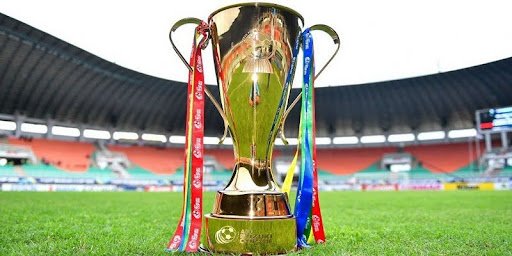
Highlights worth waiting for
- Modern stadiums: Matches will take place at UEFA-standard stadiums, with a capacity of 10,000 to 50,000 spectators.
- VAR technology: Continued to be applied to ensure fairness.
- Strengthening communication: UEFA commits to global broadcasting, with online platforms supporting Vietnamese.
The championship candidates
England, with young players like Alessia Russo and Lauren Hemp, are aiming to defend their title. Spain, with their golden generation from Barcelona, and Germany, with their vast experience, are also strong contenders. Holland and Sweden are expected to cause surprises. Join and access link vào ok9 to be able to follow this exciting tournament.
Conclude
The UEFA Women’s Championship is more than just a sporting tournament; it is a symbol of progress in women’s football. With its rich history, exciting format and shining stars, the tournament continues to capture the attention of fans around the world. Get ready to watch UEFA Women’s Euro 2025 in Switzerland, where historic moments await. Who do you think will win? Share your thoughts!