
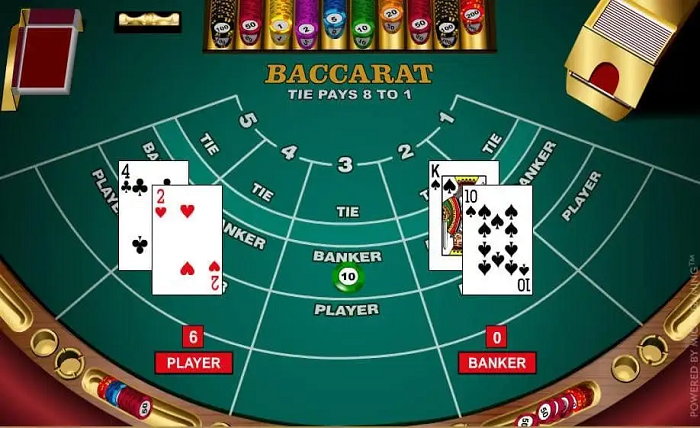
Introduction: The Game of Kings and High Rollers
Picture a scene of refined luxury: the soft glow of crystal chandeliers, the murmur of well-dressed patrons, the hushed tension around a velvet-lined table. At its center, a dealer in immaculate attire glides cards from a shoe with practiced grace. This is baccarat, a game long synonymous with sophistication, high stakes, and an aura of mysterious allure. Unlike the boisterous energy of craps or the strategic intensity of poker, บาคาร่า moves with a quiet, relentless rhythm. For centuries, it has been the favored pastime of aristocracy, from European salons to the exclusive pits of Macau and Monte Carlo. But what lies beneath this elegant surface? This guide will demystify baccarat, exploring its rich history, simple yet nuanced gameplay, strategic foundations, and its explosive growth in the modern era, proving it’s more than just a game of chance—it’s a cultural icon.
A Walk Through History: From Medieval Battlefields to Bond Films
Baccarat’s origins are shrouded in some mystery, but most historians trace its lineage to 15th-century Italy. The name itself derives from the Italian “baccara,” meaning zero, a reference to the value of face cards and tens. The game is believed to be inspired by an old Etruscan ritual involving a virgin rolling a nine-sided die, with her fate tied to the outcome.
From Italy, the game migrated to France, where it split into two main variants cherished by the nobility: Chemin de Fer (literally “railway,” referring to the passing of the banker role) and Baccarat Banque. In Chemin de Fer, popularized in 19th-century French casinos, players competed against each other, with one acting as the banker—a dynamic famously depicted in Ian Fleming’s James Bond novels. Baccarat Banque featured a more permanent banker, often the house.
The version that conquered the modern casino world is Punto Banco, a purely chance-based game where the house banks all bets. It emerged in Cuba and Argentina before finding a fervent audience at the Sands casino in Las Vegas in the late 1950s. Tommy Renzoni, a casino executive, is credited with its introduction, marketing it as an easy, glamorous game for high rollers. Its popularity was cemented in popular culture by James Bond, who played Chemin de Fer in Dr. No and Thunderball, and later Punto Banco in films like Casino Royale. Today, Punto Banco is simply what most of the world calls “Baccarat,” dominating casino floors from Las Vegas to Singapore.
The Rules Demystified: How to Play in 5 Minutes
Despite its imposing reputation, baccarat boasts some of the simplest rules in the casino. The objective is straightforward: bet on which of two hands—the Player (Punto) or the Banker (Banco)—will have a total closest to 9. You can also bet on a Tie.
Here’s the step-by-step breakdown:
- The Bet: Before any cards are dealt, you place your chip(s) on the Player, Banker, or Tie area on the table layout.
- The Deal: The dealer gives two cards each to the Player and Banker hands. These are “public” hands—no one receives individual cards. All cards are dealt face up.
- Card Values:
- Aces are worth 1 point.
- Cards 2 through 9 are worth their face value.
- Tens, Jacks, Queens, and Kings are worth 0.
- If a total exceeds 9, only the last digit counts (e.g., a 7 and an 8 total 15, but the hand value is 5).
- The “Third Card Rule”: This is the only complexity, but it’s automated. You don’t need to memorize it; the dealer follows fixed rules:
- If either the Player or Banker has a total of 8 or 9 (a “natural”), both hands stand.
- If the Player’s total is 5 or less, the Player draws a third card.
- The Banker’s decision to draw a third card depends on the Banker’s total and the Player’s third card (if drawn). The rules are tabulated and followed exactly.
- The Payout:
- Betting on Player: Wins pay even money (1:1).
- Betting on Banker: Wins pay even money minus a 5% commission (e.g., a $100 win pays $95). This commission accounts for the Banker’s slight statistical edge.
- Betting on Tie: Wins typically pay 8:1 or 9:1 (varying by casino).
The game’s beauty lies in this simplicity. Once the bets are placed, no player decisions are required. The outcome is determined by fixed rules, allowing everyone to simply enjoy the suspense.
The Mathematics of the Game: Understanding the Odds
Baccarat is not a game of skill in play, but understanding the math behind it is crucial for informed betting. The house edge is the casino’s average profit from a bet over the long term.
Here are the key probabilities for the standard 8-deck game:
- Banker Bet: Probability of winning is approximately 45.86%. The house edge, after accounting for the 5% commission, is a mere 1.06%. This is one of the best bets in the entire casino.
- Player Bet: Probability of winning is about 44.62%. The house edge is slightly higher at 1.24%. Still an excellent bet.
- Tie Bet: Probability is around 9.52%. With an 8:1 payout, the house edge skyrockets to over 14%. With a 9:1 payout, it drops to about 4.85%, but it remains a significantly worse bet than Player or Banker.
Why does the Banker have an edge? The asymmetry in the drawing rules, particularly the Banker’s ability to act after the Player, gives the Banker hand a mathematical advantage. The 5% commission is how the casino balances this.
Key Takeaway: From a purely mathematical standpoint, the Banker bet is the most favorable, followed closely by the Player bet. The Tie bet is a sucker’s wager, best avoided by strategic players.
Betting Systems and Superstitions: Strategy vs. Ritual
While you can’t influence the cards, players have employed various betting systems and rituals for centuries in an attempt to manage their bankroll or sense of control.
Common Betting Systems:
- Martingale: Doubling your bet after every loss. Theoretically, one win recovers all losses and yields a small profit. The flaw? It requires a very large bankroll to withstand a losing streak, and table limits will eventually break the cycle.
- Paroli (or Reverse Martingale): Doubling your bet after a win, aiming to ride a “hot streak” and lock in profits. It’s less risky to your bankroll but doesn’t overcome the house edge.
- Flat Betting: Sticking to a consistent bet size regardless of wins or losses. This is the most disciplined approach, minimizing volatility and allowing you to play longer.
Important: No betting system can change the fundamental odds of the game. Each hand is an independent event. Systems manage money, not probability.
The World of Superstition:
Baccarat is legendary for its rituals, especially in Asian markets where it is immensely popular.
- Card Squeezing: High rollers often slowly reveal (“squeeze”) their cards, building drama and supposedly feeling the “energy” of the win.
- Pattern Tracking: Many casinos provide scorecards or “Big Road” boards for players to track previous results (e.g., P, B, P, P, B). Players look for “trends” like “Dragon” streaks or “Choppiness,” believing they can predict future outcomes. This is the Gambler’s Fallacy—past results do not influence future independent events.
- Lucky Charms & Rituals: Blowing on cards, touching the table in a specific way, or sitting in a “lucky” seat are all part of the theater.
These superstitions add to the cultural fabric and enjoyment of the game but have no bearing on mathematical outcomes.
Baccarat in the Digital Age: Online and Live Dealer Revolution
The internet has democratized baccarat, moving it from the exclusive high-limit room to the screens of players worldwide.
- Online RNG Baccarat: Using Random Number Generator software, these games are fast, accessible, and offer low minimum bets. They often include side bets like “Player Pair” or “Banker Pair” for extra action, though these come with higher house edges.
- Live Dealer Baccarat: This is the game-changer. Streaming in real-time from professional studios or actual casino floors, a human dealer operates a physical table. Players place bets via a digital interface, chat with the dealer, and experience the social atmosphere of a land-based casino from home. Popular variants include:
- Speed Baccarat: Faster rounds.
- No-Commission Baccarat: Eliminates the 5% commission but alters payout rules (e.g., Banker wins on 6 pay 1:2).
- Baccarat Squeeze: Replicates the card-squeezing ritual.
- Accessibility and Variety: Digital platforms offer tutorials, free-play modes, and a vast array of table limits, making it the perfect place for beginners to learn and for veterans to find their preferred style.
The Cultural Icon: From Macau’s VVIP Rooms to Pop Culture
Baccarat’s cultural footprint is immense. It is the undisputed king of casino revenue, particularly in Asia. In Macau, which dwarfs Las Vegas in gaming revenue, baccarat accounts for over 80% of total casino win. The “VIP” and “VVIP” rooms cater to ultra-high-net-worth individuals, where single bets can reach millions of dollars.
In the West, its image is forever tied to James Bond. The character’s association with baccarat (and later poker) cemented its status as the game for the cool, sophisticated, and intelligent risk-taker. It appears in countless other films, from the gritty tension of Casino to the opulent scenes in The Great Gatsby.
This blend of Eastern economic powerhouse and Western cinematic cool makes baccarat a unique global phenomenon—a simple card game that carries the weight of history, wealth, and style.
Conclusion
Baccarat is a fascinating study in contrasts. Its rules are elegantly simple, yet its history is richly complex. It is a game of pure chance, yet it inspires intricate rituals and a veneer of strategy. It whispers of old-world European aristocracy but roars as the financial engine of modern Asian gaming capitals. Whether you’re drawn by its low house edge, its cinematic glamour, or the pure, suspenseful rhythm of the deal, baccarat offers an unmatched casino experience. Understanding its mechanics and mathematics allows you to appreciate the game beyond the mystique. So, the next time you see that elegant table—whether in a glittering casino or on your screen—remember you’re engaging with a piece of living history. Place your bet on the Banker, enjoy the show, and savor the timeless appeal of the game where, for a moment, anyone can feel like royalty.
Frequently Asked Questions (FAQs)
- Is baccarat a game of skill or luck?
Baccarat is overwhelmingly a game of luck. Once you place your bet on Player, Banker, or Tie, the outcome is determined entirely by the dealt cards and fixed drawing rules. No skill can influence the result of a hand. The only “skill” involved is in making mathematically sound betting decisions (e.g., avoiding the Tie bet) and managing your bankroll responsibly. - Why is there a 5% commission on Banker bets?
The Banker bet has a slightly higher probability of winning (about 45.86%) than the Player bet (44.62%) due to the rules governing when a third card is drawn. To compensate for this built-in advantage and ensure the house still profits, casinos charge a 5% commission on winning Banker bets. Even with this commission, it remains the best bet on the table. - What is the “Tie” bet and should I ever make it?
The Tie bet is a wager that the Player and Banker hands will finish with the same total. While it offers an enticing high payout (usually 8:1 or 9:1), it has a very low probability of occurring (about 9.5%) and carries a massive house edge (over 14% for 8:1). It is statistically the worst bet in baccarat and is not recommended for strategic play. - What’s the difference between Mini-Baccarat and traditional Baccarat?
The game rules are identical. The differences are in atmosphere and pace. Mini-Baccarat is played on a smaller table, similar to a blackjack table, with lower betting limits. The dealer handles all the cards quickly, and there is no opportunity for players to touch or squeeze the cards. Traditional (Big) Baccarat is played on a large, ornate table in a high-limit area. The pace is slower, rituals like card squeezing are common, and the stakes are much higher. - Can I use a card counting strategy in baccarat like in blackjack?
Effective card counting in baccarat is virtually impossible and not worthwhile. Unlike blackjack, where the removal of cards significantly changes the odds for subsequent hands, the effect in baccarat is minuscule. The house edge on the main bets is already very low and stable. Furthermore, casinos use multiple decks (often 8) and shuffle frequently, rendering any potential counting advantage negligible and not practical for the average player.